
How to Paint and Maintain Your AR500 Steel Shooting Targets
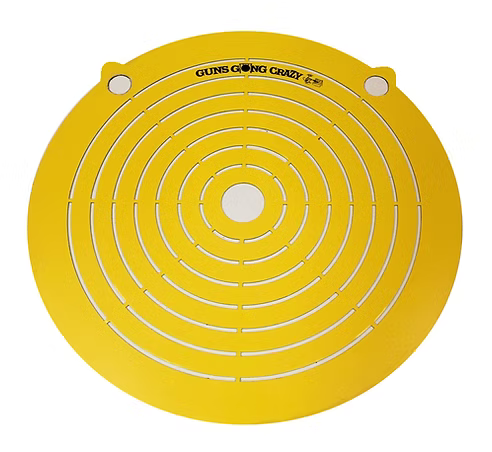
Every steel shooter runs into the same moment eventually. You are a few strings into a good session, the gong is ringing on every hit, and then you walk downrange to check your groups and realize you cannot tell your fresh hits from the ones you put there twenty minutes ago. The face of the plate is a gray smear of lead and copper, and all that satisfying feedback you were getting from the sound is gone the moment you try to read the target up close.
That is what paint solves. A coat of paint on an AR500 steel gong target is not about making it look pretty, although a freshly coated high-vis gong is a genuinely nice thing to shoot at. Paint is a diagnostic tool. It shows you exactly where every round is landing, it lets you spot developing problems with the steel before they become safety issues, and with the right approach it takes almost no time to maintain. This guide covers everything you need to know about painting and maintaining your steel targets, from choosing the right paint to prepping the surface to the fastest way we have found to keep a gong shootable session after session.
Why You Paint a Steel Target in the First Place
Before we get into the how, it is worth being clear about the why, because understanding what paint is actually doing for you changes how you approach it.
The first and most obvious job of paint is hit indication. When a bullet strikes a painted AR500 steel gong, it removes paint at the point of impact and leaves a clean mark against the colored background. That mark tells you precisely where the round landed. For anyone working on accuracy, whether you are zeroing a rifle, practicing a pistol drill, or teaching a new shooter, that visual feedback is enormously valuable. The ring of steel tells you that you hit somewhere on the plate. The paint tells you exactly where, and that is the information you actually need to improve.
The second job of paint is one most people do not think about, and it matters more for safety. A painted surface makes it far easier to inspect your target for wear, pitting, and damage. On a bare steel plate that has taken thousands of rounds, surface irregularities can be hard to see against the dull gray of used steel. On a freshly painted plate, a developing pit or a cratered area shows up clearly because the paint sits differently on damaged steel than it does on smooth steel. Reading your target this way is one of the best habits a steel shooter can build, and we will come back to it later in this guide.
Choosing the Right Paint for AR500 Steel
The good news is that you do not need anything exotic. The paint that works best on steel gong targets is ordinary spray enamel, the same kind you can buy at any hardware store. What matters is less about the brand and more about a few characteristics that make paint work well in this specific application.
Color is the first consideration, and it is not just a preference. High-visibility colors dramatically improve hit indication, especially at distance. Bright white is the classic choice because bullet marks show up against it with maximum contrast, and it is easy to see from the firing line even on a rifle target set out at a few hundred yards. High-vis orange, safety yellow, and bright green are also excellent and have the added benefit of standing out against natural backgrounds like dirt berms and brush. Many shooters keep a can of white and a can of a bright accent color, painting the whole plate white and then adding a smaller colored aiming point in the center.
You want a fast-drying spray enamel rather than a thick industrial coating. The goal is a thin, even layer that a bullet strips cleanly on impact. Thick coatings, brush-on paints, and specialty finishes do not buy you anything here and can actually make the surface harder to read. Cheap flat spray paint in a high-vis color is close to ideal. Avoid anything oil-heavy or slow-curing, and there is no reason to pay for premium enamel when the coat is going to get shot off in a session or two anyway.
Prepping the Gong Before the First Coat
Paint adheres best to a clean, dry surface, and a couple of minutes of prep makes the difference between a coat that goes on evenly and one that beads up or flakes.
Start by knocking off any loose debris, dirt, or old flaking paint. If your gong has been sitting in a truck bed or a shed between sessions, wipe it down and let it dry completely. Moisture is the enemy of a clean coat, so a plate that has been out in the morning dew or a light rain needs to dry before you spray it. If there is any oil or grease on the surface, and there often is on new steel that shipped with a protective film, a quick wipe with a degreaser or even a rag with a little brake cleaner will strip it so the paint can grip.
You do not need to sand or prime an AR500 steel gong target. The hardened surface takes spray enamel fine as long as it is clean and dry. This is one of the areas where steel targets are refreshingly low maintenance compared to most gear.
Applying the Paint for a Clean, Even Coat
Hang or stand the target the way you normally would, or lean it against something stable so the face is roughly vertical and you can reach the whole surface. Shake the can well, hold it eight to twelve inches from the plate, and lay down the paint in smooth, overlapping passes rather than trying to blast on a heavy coat in one spot. Two thin passes give you a more even surface than one thick one, and they dry faster.
Let the paint flash off for a few minutes before you start shooting. Fast-drying enamel is usually ready to shoot within ten or fifteen minutes on a warm, dry day, longer if it is cold or humid. There is no harm in painting your targets at the start of a session, setting them out at distance, and letting them finish drying while you get the rest of your gear staged and your firing line set up.
If you are running multiple gongs, painting all of them at once at the beginning of the day is the efficient approach. And if you want to skip the freehand aiming point entirely and get a crisp, repeatable bullseye every single time, this is where a stencil earns its place in your range bag.
The Fast Way to Repaint: Magnetic Stencils
The single biggest hassle with painting steel targets is not the first coat of the day. It is the repainting. Once a plate is chewed up with hits, you either walk out to it, wipe it down, and freehand another aiming point, or you shoot a target you can no longer read clearly. Doing that over and over across a long session gets old fast.
This is the problem a magnetic target stencil is built to solve. Instead of freehanding a bullseye, you snap the magnetic stencil onto the face of your steel gong, spray over it, and pull it off. What you are left with is a clean, consistent aiming point in a few seconds with no masking, no measuring, and no overspray bleeding into a ragged shape. The magnet holds it flush against the plate so the edges come out sharp, and because the stencil is reusable you are not going through tape and cardboard every time you want to reset your target.
The practical payoff is that repainting stops being a chore you avoid. When resetting your aiming point takes under a minute, you actually do it, which means you spend the whole session shooting at a target you can read instead of guessing at a gray smear. For anyone who shoots regularly, that is the difference between paint being a tool you use and paint being a step you skip.
How Often Should You Repaint?
There is no fixed schedule, because how fast paint comes off depends on how much you are shooting and what you are shooting. A high-volume pistol session on a close target will strip paint quickly, while a few precision rifle rounds at distance might leave the coat mostly intact for a good while.
The honest answer is that you repaint when you can no longer clearly read your hits. That is the whole point of the paint, so when it stops giving you clear feedback, it is time to refresh it. In practice, many shooters repaint the aiming point every few strings and give the whole plate a fresh full coat at the start of each range day. With a stencil making the aiming point a ten-second job, you can afford to reset it as often as you want without it eating into your shooting time.
Reading the Paint: What Your Target Is Telling You
Here is where painting crosses over from a convenience into a genuine safety and maintenance practice. Every time you repaint, you are getting a fresh look at the condition of your steel, and a properly maintained AR500 gong will tell you a lot if you know what to look for.
On a healthy plate, bullet marks appear as clean craters or smears where the paint was removed, and the underlying steel stays smooth and flat. That is exactly what you want to see. AR500 steel is rated to a Brinell hardness of roughly 500 specifically so that it destroys the bullet on impact rather than letting the bullet deform the plate, which is why a good gong stays smooth shot after shot.
What you are watching for is any sign of pitting, cratering, or dimpling in the steel itself. If the surface under the paint is developing pits or divots, that is a warning sign. Damaged steel changes the way bullet fragments come off the plate, and once a surface becomes irregular, fragmentation patterns get unpredictable in a way that no safe distance guideline can fully account for. Pitting is usually caused by shooting too close, using steel-core or armor-piercing ammunition, or hitting the plate with more velocity and energy than it is rated for. We cover the specifics of what causes this and how to avoid it in our guide to safe shooting distances by caliber, and it is worth reading if you want your steel to last. If you ever find real pitting on a plate, the right response is to increase your distance significantly or retire that target. A fresh coat of paint on a damaged plate hides exactly the information you most need to see, which is one more reason to inspect the bare steel as you clean and repaint.
Maintenance Beyond Paint: Keeping Your Whole System Shootable
Paint is the maintenance you will do most often, but a steel target system is more than just the plate, and a few minutes of attention to the rest of it keeps everything running for years.
Rust is the main long-term threat to bare steel, and the good news is that regular shooting and repainting naturally slow it down, since a painted surface is a protected surface. The bigger risk is a gong that gets put away wet and stored somewhere damp between sessions. Letting your plate dry before it goes into storage, and keeping it somewhere reasonably dry, prevents the surface rust that would otherwise develop on the unpainted edges and the back of the plate. A light surface haze of rust on a working target is cosmetic and nothing to worry about, but it is easy to avoid entirely with a little care.
The hanging hardware deserves the same attention as the plate. Every time you paint and reset your targets, take a look at your straps and hardware. If you are running a Kevlar strap system, inspect the straps for fraying or thinning, since Kevlar will show you visible wear before it fails, unlike chains that give no warning before a link lets go. We break down exactly why that matters in our comparison of Kevlar straps versus chains. Building target inspection into your normal painting routine means you are checking the whole system regularly without it ever feeling like a separate chore.
Bringing It All Together
Painting and maintaining a steel target comes down to a simple rhythm. Start each range day with a clean, dry plate and a fresh coat of high-vis paint. Reset your aiming point whenever you can no longer read your hits clearly, and use a stencil to make that a ten-second job instead of a downrange chore. Every time you repaint, take a few seconds to read the bare steel and confirm your plate is still smooth and healthy. Let everything dry before it goes into storage, and glance at your hanging hardware while you are at it.
Do that, and a quality AR500 steel gong target will stay clear, readable, and safe to shoot for a very long time. The Magnetic Target Stencil is the single easiest upgrade to that routine, turning the most tedious part of target maintenance into something you barely have to think about, so you can spend your range day doing what you came to do.
Shoot straight, shoot safe, and hear that ring.