
Why Kevlar Straps Are Safer Than Chains for Hanging Steel Gong Targets
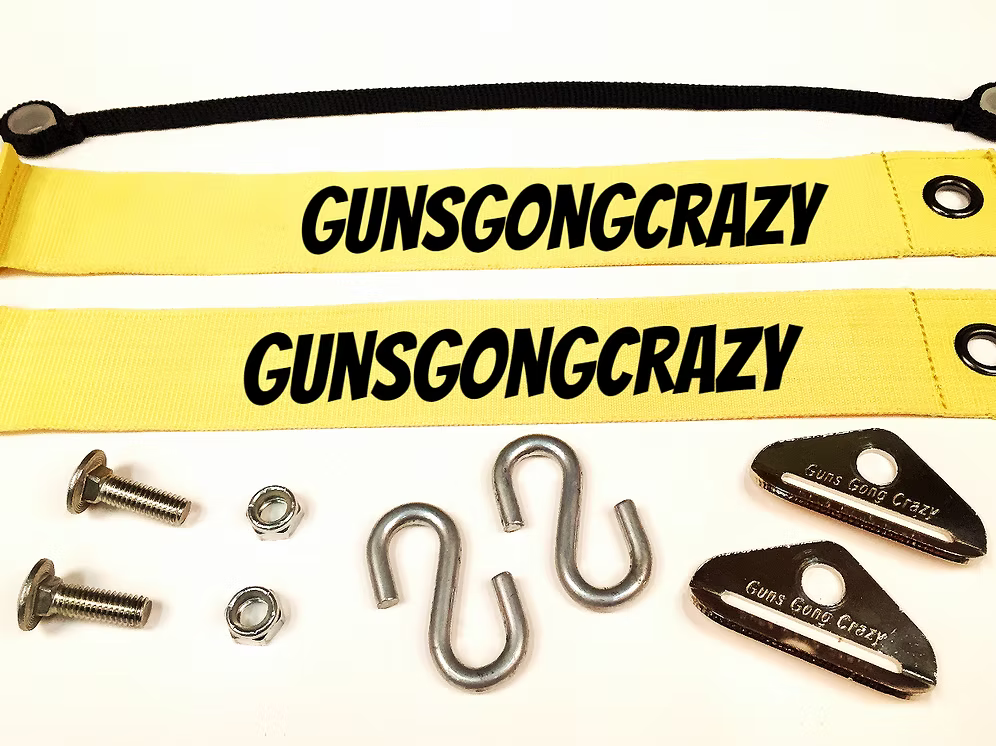
If you have ever set up a steel gong target at the range, there is a good chance you used a chain to hang it. It’s what most people reach for. Chains are inexpensive, easy to find at any hardware store, and on the surface look strong enough to handle the job. After all, if something is strong enough to pull out a stuck truck, it should be strong enough to hold a steel target, right?
Not exactly.
What actually happens when a bullet hits a steel gong target hung by a chain is a very different story from what most people expect. And once you understand the physics of it, you won’t look at chains the same way again. This article is going to walk you through exactly why Kevlar straps have become the gold standard for hanging AR500 steel gong targets safely, why chains create real hazards that most shooters do not realize they are exposing themselves to, and what you should be looking for when you set up your shooting range target system.
Let’s start from the beginning.
What Actually Happens When a Bullet Hits a Hanging Steel Gong Target
Before we get into materials, it helps to understand what a steel gong target is actually doing when shot at. When a bullet traveling at anywhere from 1,000 to over 3,000 feet per second makes contact with a hardened AR500 steel plate, the energy from that impact does not just disappear. It has to go somewhere.
Some of that energy pushes the gong backward, which is why it swings. Some of it gets converted into that satisfying ring of sound that sportsmen love. And some of it turns into what are called splatter fragments, tiny pieces of copper jacket and lead that spray outward at steep angles from the face of the plate.
The problem with chains is not that they break under the weight of the target. A chain is more than strong enough to hold a steel gong. The problem is what happens in those fractions of a second during and after impact, and what the chain itself does in response.
The Chain Deflection Problem That Most People Don’t Talk About
Here is something that does not come up enough in conversations about range safety. When your bullet hits a steel gong hung by a chain, those splatter fragments spray outward from the face of the plate. A significant portion of them travel upward. And what sits directly above your AR500 steel gong target? Your chain.
When lead and copper fragments traveling at high velocity strike a steel chain, they do not just bounce off harmlessly into the sky. The chain deflects those fragments downward and to the sides. Depending on the angle, the link geometry, and how taut the chain is at the moment of impact, you can end up with fragmentation being redirected back toward the shooter or bystanders in ways that are unpredictable.
This is not a theoretical concern. It is physics. The chain is a hard, angular surface made of steel, and it is positioned in the exact path that upward splatter fragments travel after impact. Every single shot you take is sending fragments toward that chain, and a percentage of those fragments are going to be redirected by it.
Kevlar straps do not behave this way. Kevlar is a fiber material, not a rigid metal surface. When bullet fragments contact Kevlar, they do not deflect off it at sharp angles. The fibers absorb impact energy rather than redirecting it. The geometry of a flat strap is also far less likely to create the kind of ricochet angles that chain links can produce. You are eliminating a hard steel surface from the path of your fragmentation, and that matters.
Chain Wear and Why It Fails in Ways You Cannot Always See
Let’s talk about something that every shooter who has used chains long enough has eventually experienced: the moment a chain link gives out.
Chain links under repeated impact stress do not fail in the dramatic, obvious way that most people picture. They do not snap cleanly or give you a warning. What actually happens is that the repeated micro-impacts from hundreds or thousands of rounds slowly work the steel of each link. The links are not designed to absorb this kind of cyclical lateral stress. Over time, the metal at the stress points inside the link develops small fractures that are invisible to the naked eye. And then one day, often on what seems like a completely ordinary shot, the link reaches its limit.
When a loaded AR500 steel gong target drops because a chain link fails, you have a heavy steel plate falling onto a stand, onto the ground, or potentially swinging free. If you are close to the target for any reason: adjusting your setup, checking a paint hit, walking downrange, this is now a serious hazard.
Kevlar straps wear in a very different way. Because Kevlar fiber absorbs and distributes stress rather than concentrating it at a single failure point, the material shows visible wear before it reaches the point of failure. You can actually inspect a Kevlar strap and see fraying or degradation before it becomes a safety problem. A chain link gives you no such warning. It looks fine until it does not.
This is one of the most underappreciated differences between the two hanging systems. Predictable wear versus invisible failure modes is a meaningful distinction when you are talking about a piece of equipment holding a multi-pound steel plate above the ground at an active shooting range.
The Problem with Chain Noise and What It Tells You
Here is something a little more practical that many range day shooters notice quickly. When your AR500 steel gong target is hung by a chain and it swings after impact, the chain itself clanks and rattles against the hardware. It creates a secondary noise signature on top of the ring of the gong.
This might seem like a minor annoyance, but it actually tells you something important about the forces involved. That clanking is the sound of metal on metal contact, chain links swinging and striking each other and the support hardware with every shot. Each one of those contacts is another stress event on the chain system. Every impact, every swing, every rattle is working the metal.
Kevlar straps are quiet under load. They flex and absorb the swing energy from an impact without creating that secondary contact noise. This is not just a comfort thing. It is an indicator of how the two materials are handling the stress of being used as a hanging system on an actively shot steel target. One is transferring and concentrating energy. The other is absorbing and distributing it.
How Kevlar Straps Handle the Temperature Problem Better Than Chains
If you shoot outdoors, and the majority of people who own portable steel gong targets do, you are dealing with a wide range of temperatures across the seasons. Steel chains change their mechanical properties with temperature. In very cold conditions, steel becomes more brittle. A chain that performs adequately in summer conditions at your outdoor range in September may behave differently on a cold morning in January.
Cold weather shooting is extremely common. Whether you are hunting, training, or getting range time during the winter months, your equipment needs to perform reliably when the temperature drops. Steel chains develop increased brittleness in freezing conditions, and the stress that repeated bullet impacts put on those chain links is exactly the kind of loading that cold embrittled metal handles worst.
Kevlar fibers do not have this problem in any meaningful way across the temperature range that a typical sportsman encounters. Kevlar maintains its strength and flexibility from well below freezing to temperatures far beyond anything you would encounter on a range day. You are not introducing a variable to your setup based on what season it is or what the thermometer says that morning.
This is especially relevant if you are a serious shooter who gets out year round. Your steel gong hanging system should perform consistently whether you are setting up in July heat or a January freeze, and Kevlar straps give you that consistency in a way that steel chains simply do not.
The Setup Advantage That Actually Makes Kevlar Straps Safer in Practice
Safety is not only about what happens when a bullet impacts the target. A significant portion of range accidents and equipment incidents happen during setup and breakdown, when people are handling gear, adjusting positions, and working close to the target system.
Chains are heavy, awkward, and have a tendency to tangle. Setting up a steel gong target hung by chains means wrestling with metal links, threading hardware through chain eyes, and dealing with a system that has sharp edges and snag points. During breakdown, you are handling chains that have just been subjected to high-velocity impacts for potentially hours, and you’re doing that while also handling a steel plate that may be warm from shooting.
Kevlar straps are lighter, more flexible, and significantly easier to work with in the field. They store flat, thread easily through hardware, and do not have the sharp edges and snag prone geometry of chain links. When you are setting up at a remote location, maybe out in the Idaho high desert or a mountain range, where you are working quickly and possibly in conditions that are not ideal, the ease and simplicity of a Kevlar strap system reduces the chance of a handling incident during setup.
The best range safety practices are the ones that hold up under real conditions, not just ideal ones. A hanging system that is straightforward and fast to set up correctly is a safer system, because it reduces the chance that someone skips a step or takes a shortcut to save time.
Weight Distribution and Why It Matters for AR500 Gong Stability
One of the less discussed advantages of Kevlar straps over chains for hanging steel gong targets is how they affect the way the target hangs and moves. A chain adds meaningful weight to the suspension system above the plate. On a heavy AR500 steel gong, this may not be immediately obvious, but on smaller gongs and lighter targets, chain weight can affect the hang angle and the swing behavior of the plate after impact.
Kevlar straps are significantly lighter than an equivalent length of steel chain. This means the target hangs in a cleaner, more predictable way. The swing after impact is more consistent. The reset after a shot is more reliable. For competitive shooters doing timed drills where they are watching for the swing and ring to confirm hits, a predictable and consistent target movement is actually a functional advantage, not just for safety.
For people running multiple targets on a single stand or frame, the weight savings from switching all hanging hardware to Kevlar adds up. You are keeping the overall system lighter, which also matters for portability, especially if you are someone who loads your range gear into a truck bed and hikes it out to a field or private land where you shoot.
What to Look for in a Quality Kevlar Strap for Steel Target Hanging
Not all Kevlar straps are created equal, and it is worth knowing what separates a quality hanging strap from one that is going to cause you problems down the road. The core things to look for are strap width, fiber quality, the hardware that attaches the strap to the target and the support system, along with the rated load capacity of the complete assembly.
Width matters because a wider strap distributes the load across more surface area, both on the strap itself and at the connection points on your target. Narrow straps concentrate stress at narrower points, which both accelerates wear on the strap and puts more focused pressure on the holes or hardware it passes through on the steel plate.
The hardware connecting your strap to your target system is often overlooked, but it is just as important as the strap material itself. Solid steel connection hardware with smooth contact surfaces reduces wear on the strap at the connection points. Sharp or rough hardware edges will abrade Kevlar fiber over time, accelerating wear right where you least want it.
A good Kevlar hanging kit for a steel gong target should include straps that are rated well above the expected load, connection hardware that is designed to work with the strap material without creating abrasion points, and ideally a visual inspection guide or wear indicator that lets you know when replacement is appropriate. The Kevlar Hanging Kit from Guns Gong Crazy was designed with all of this in mind. It was built specifically for use with AR500 steel gong targets and the kind of real world shooting that people actually do at the range, not just the theoretical loads that look good in a specification sheet. If you are setting up a portable steel target system and you want a hanging solution that was purpose built for the job, that is where to start.
The Long Term Cost Comparison Between Chains and Kevlar Straps
Some people initially resist switching from chains to Kevlar straps because chains are cheap and available at any hardware store. This is completely understandable. When you are buying gear for a range setup, cost matters, and a few feet of chain from the hardware section costs almost nothing.
But the cost comparison changes when you account for replacement cycles and the value of your safety and your equipment. Steel chains wear in ways you cannot see, as we discussed earlier, which means the responsible thing to do is to replace them on a schedule rather than waiting for a visible sign of failure. That means ongoing cost, plus the labor of sourcing the right size and grade of chain, threading it through your setup, and adjusting the hang length.
Kevlar straps have a longer effective service life under the conditions you encounter at a shooting range because they do not develop the invisible fatigue failure modes that steel chain links do. And because wear in Kevlar fiber is visible, you replace straps when the evidence tells you to, not on an arbitrary schedule driven by uncertainty about what is happening inside your chain links.
When you add up the replacement cycles, the hardware compatibility, and the safety margin you get from a system with predictable wear characteristics, Kevlar straps offer a better value proposition over the life of your target system than chains do. Not even accounting for the safety advantages, the economics work out in favor of Kevlar over any meaningful time horizon.
What Real Shooters Who Have Made the Switch Say
The feedback from people who switch from chains to Kevlar straps for hanging their steel gong targets is consistent. The first thing almost everyone notices is how much cleaner the setup is. No more wrestling with chain links in cold weather. No more sharp edges catching on gear or hands during setup and breakdown.
The second thing people consistently report is how much better the targets swing and reset. Without the added weight and rigidity of a chain, the gong moves more naturally after impact and comes back to rest in a more consistent position. For anyone running timed drills or watching their target movement as feedback, this is a real improvement to the range day experience.
And the third thing, which matters most in the long run, is the peace of mind that comes from knowing your target hanging system is not going to fail in an unpredictable way. When you set up a target, walk back to the firing line, and put rounds downrange, the last thing you want in the back of your mind is any uncertainty about whether your chain links are holding up. Kevlar straps remove that uncertainty from the equation.
Setting Up Your AR500 Steel Gong Target Correctly with Kevlar Straps
Getting the most out of a Kevlar strap hanging system for your steel gong target starts with the setup. The strap should be threaded through the hanging hole on your AR500 gong with enough length to allow the target to swing freely after impact. A target that is hung too tightly and cannot swing is a target that is absorbing all of the impact energy through the hanging system rather than converting it to movement, which accelerates wear on every component.
The hang angle of the gong matters too. Our hanging system includes hardware that allows a slight forward tilt of a few degrees which directs bullet splatter fragments downward toward the ground rather than outward toward the shooter. This is a basic safety principle for all steel target shooting, and it is worth getting right regardless of what hanging system you are using. Your Kevlar straps should be long enough that this forward tilt angle is achievable within your stand or frame geometry.
Inspect your Kevlar straps every time you set up and break down, the same way you would when you clean and repaint your gong. Look for visible fraying, thinning, or any areas where the fiber appears compressed or damaged. Unlike chains, Kevlar will tell you when it is getting close to the end of its service life. Listen to what it is telling you and replace straps when the evidence points that way. The cost of a replacement strap is negligible compared to the consequences of a hanging failure.
Store your Kevlar straps flat and away from UV exposure when they are not in use. While Kevlar’s strength under impact and tension is exceptional, prolonged UV exposure can degrade the fiber over time. A range bag or storage case that keeps your straps out of direct sunlight between range sessions is all the maintenance they require.
The Bottom Line on Kevlar Straps vs. Chains for Hanging Steel Gong Targets
At the end of the day, the choice between chains and Kevlar straps for hanging your AR500 steel gong target comes down to a simple question: are you treating your shooting range setup like a serious piece of safety equipment, or are you improvising with hardware store parts?
Chains are a legacy solution from a time when the physics of steel target hanging was less well understood, and when the alternatives available today simply did not exist. They work well enough to hold a target up, which is why they became standard practice. But holding a target up is only one part of the job. A hanging system for an AR500 steel gong also needs to manage fragmentation patterns, fail predictably rather than invisibly, perform consistently across temperature ranges, and give you confidence every time you walk to the firing line that your setup is solid.
Kevlar straps do all of those things better than chains. They reduce the fragmentation deflection risk from the hanging hardware. They wear visibly so you know when replacement is due. They are unaffected by cold weather embrittlement. They are lighter, easier to work with, and designed specifically for this application.
If you have been hanging your steel gong targets with chains because that is what came with your setup or what you had on hand, now is a good time to make the switch. Your range days will be cleaner, your setup will be faster, and most importantly, you will have removed a real safety variable from your shooting environment. The Guns Gong Crazy Kevlar Hanging Kit was built from the ground up for exactly this purpose. It is what we use on every target system we build here in Idaho, and it is the hanging solution we stand behind completely. If you are ready to upgrade your setup, you can find it right here in our shop.
Shoot straight, shoot safe, and hear that ring.