
Why Is Your AR500 Steel Target Pitting? Causes and How to Fix It
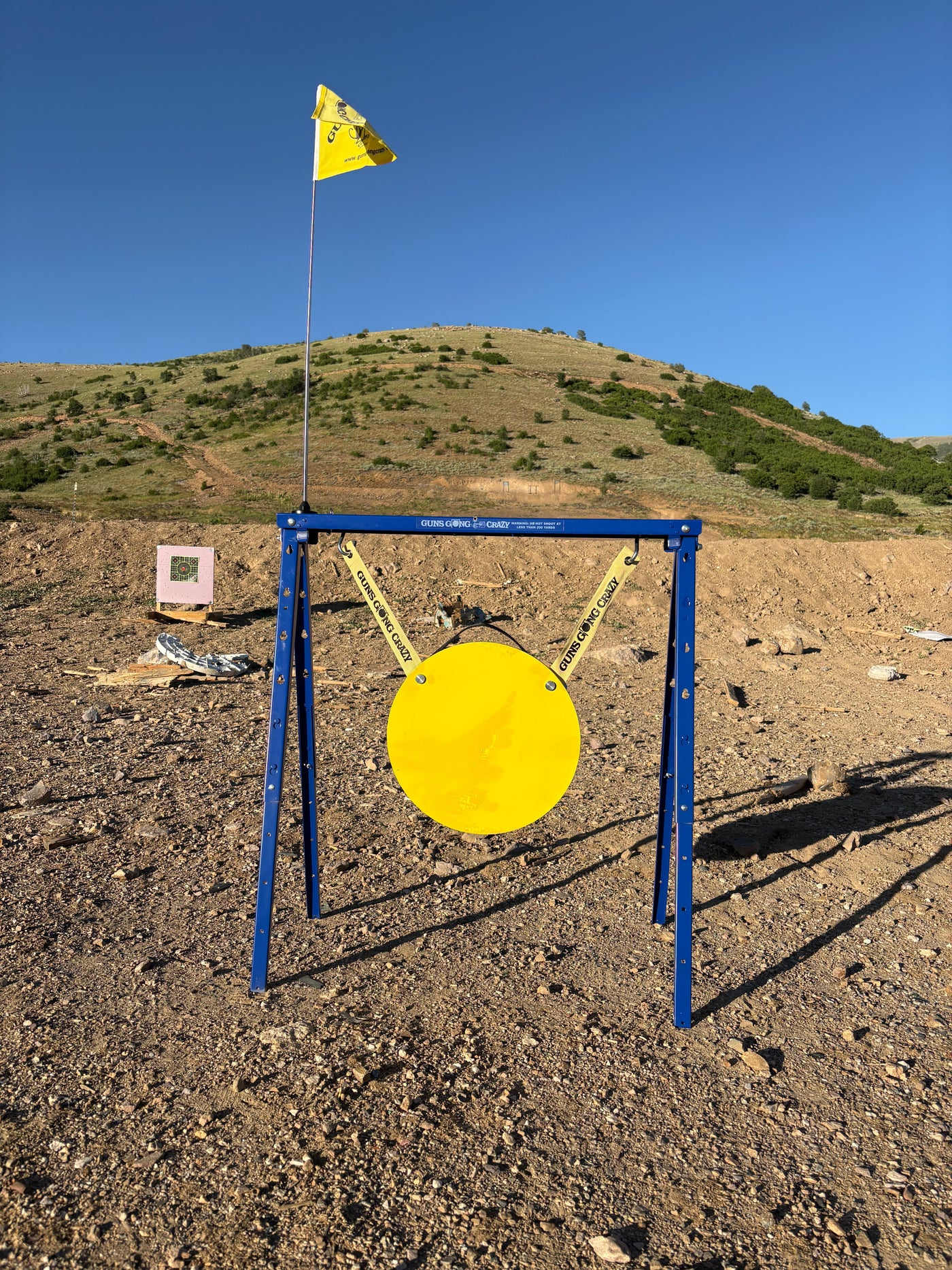
You walk down range to check your target and you see it. A little crater that's the size of a dime sitting right in the middle of a plate that was smooth a few range trips ago. Your first thought is probably that you got a bad piece of steel. Your second thought is probably that you're about to have a much more expensive hobby than you planned on. Before you do either of those things, let's talk about what's actually happening when a target pits, because it's not really about the steel being bad. Nine times out of ten, it's about physics doing exactly what physics does.
It's Not the Steel's Fault. It's the Heat.
Here's the part that surprises most people the first time they hear it: If you are setting your target up at appropriate yardage, AR500 steel doesn't pit because a bullet is punching through it like a drill. It pits because of heat, not brute force. When a bullet is shot into a hardened steel plate at a few thousand feet per second, almost all of that kinetic energy has to go somewhere in a fraction of a millisecond. Most of it turns into heat, right at the point of impact. We're talking temperatures that can momentarily approach the melting point of the steel in that one tiny spot, even though the rest of the plate stays at ambient temperature.
When that happens, the steel at the point of impact briefly softens. Softened steel doesn't behave like AR500 steel anymore. It behaves like much weaker metal you'd get if you took the hardness out of it, which means the bullet, or more accurately the shockwave and the melted spray of jacket and core material, can actually deform it. The plate cools back down almost instantly, but the little crater is already there, hardened into the surface. You're not looking at a weak spot in your target. You're looking at a spot that got hot enough, for long enough, to lose its temper for a split second.
This matters because it changes how you think about the problem. If pitting were about the steel being too soft or too thin, the fix would just be "buy thicker steel and never worry about it again." But since pitting is fundamentally a heat problem, thickness only helps so much. What controls how much heat builds up at the point of impact is velocity, and that's where almost every pitting complaint traces back to.
Velocity Is the Real Culprit
Every AR500 target has a velocity ceiling, and it's usually somewhere in the neighborhood of 3,000 feet per second at the muzzle for standard AR500, though the number that actually matters is the velocity at impact, not the velocity coming out of the barrel. A round that's coming out of a short barreled rifle loses velocity fast over distance, which is why the same cartridge that would damage a plate at 50 yards might leave nothing but a shiny mark at 200 yards. Distance isn't just a safety buffer for ricochets. It's also doing work bleeding off the energy that would otherwise turn into heat on impact.
This is why the classic pitting complaint almost always follows the same script. Someone's shooting a 5.56 rifle with a 16-inch barrel at 100 yards, using standard 55 grain ammunition, and their gong starts showing craters after a few range sessions. It's not that their gong is defective. It's that a 16-inch AR-15 at 100 yards is sitting right at the edge of what standard AR500 can handle without complaint. Push that same round out to roughly 200 yards, and the velocity drop is usually enough to bring it back under the threshold where pitting starts.
Steel core and steel jacketed ammunition make this worse in a way that has nothing to do with the softer lead core underneath. Steel is harder than the target itself in some cases, or at least hard enough that it doesn't deform and spread its energy across the target face the way a lead or copper bullet does. Instead of flattening out and dispersing that heat and force over a wider area, it concentrates it, and concentrated heat at a single point is exactly the recipe for a pit. If you've ever pulled the trigger on a cheap steel core surplus ammo at your steel target and watched a gong start looking damaged, that's why.
Angle Does More Than You'd Think
If you've read anything else on this blog, you already know we talk about hanging targets at a downward angle for safety, so that fragments deflect toward the ground instead of back at the shooter. What doesn't always get mentioned is that the same angled mount that keeps you safe also reduces pitting, and the reason comes back to heat. A bullet that strikes a target dead square, at ninety degrees, dumps essentially all of its energy directly into that one point of contact. A bullet that strikes a properly angled target is hitting relative to the bullet's path, which means more of that energy gets converted into lateral motion and fragmentation spread across a wider area of the plate face, rather than being absorbed at a single point.
A target hanging flat, or one that's rigidly bolted so it can't move at all on impact, is going to pit faster than one that's free to swing on a Kevlar strap and angled the way it's supposed to be. That's part of why we build our stands with an adjustable lean rather than a fixed vertical mount, and why the hanging system matters as much as the plate itself. The gong isn't just a piece of steel. It's one half of a system, and the other half of that system is what determines whether the energy from every hit gets managed the way it's supposed to be, or concentrated into the same six square inches over and over.
Shop the Guns Gong Crazy AR500 Target System → It is built to hang at the correct downward angle on non-stretch Kevlar, so the energy from every hit gets spread across the plate instead of hammering the same spot.
Repeated Fire on the Same Spot Will Always Lose
Here's a mechanism that catches people off guard because it doesn't feel like it should matter, but it does. Even shots that individually wouldn't cause pitting can add up if they keep landing in the exact same place. Every impact, even a clean one that doesn't visibly damage the surface, is doing a small amount of micro level of work hardening and stressing to that spot on the plate. It's somewhat like bending a paperclip back and forth. No single bend breaks it, but repetition eventually does. A target that gets shot at from a fixed rest, at a fixed distance, by someone with excellent fundamentals hitting the same three-inch circle over and over, will start showing wear in that spot long before the rest of the plate does, even if every individual round was technically within the safe velocity window. This is actually a good problem to have, because it means you're shooting well, but it's worth knowing about so you don't panic and assume your target is failing prematurely. Rotating the target periodically, or just accepting some noticeable wear in your favorite aiming point over time, is normal and not a sign anything is wrong with the steel.
What Actually Fixes It
Once you understand that pitting is a heat and energy problem rather than a strength problem, the fixes make a lot more sense than just "buy a thicker plate and hope." The first and easiest adjustment is distance. If you're pitting a target, step back before you do anything else. An extra 25 or 50 yards can solve the problem entirely because of how quickly velocity drops off with distance, especially with pistol calibers and lighter rifle rounds.
The second fix is ammunition. If you're using steel core, steel jacketed, or armor piercing rounds on a target rated for standard ammunition, that's the single fastest way to turn a good plate into a cratered one, and no amount of extra distance fully compensates for it. Save those loads for paper.
The third fix, and the one people skip most often because it feels like an extra step, is making sure the target is actually hung and angled the way it's meant to be. A plate that's allowed to swing freely on Kevlar straps and lean at the right angle is doing real work absorbing and redirecting energy before it ever becomes a pit. A target that's rigid, flat, or improperly mounted is fighting against physics instead of using it.
And if none of that applies, and you're shooting appropriate ammunition at appropriate distances on a properly angled, freely hanging target and you're still seeing pitting faster than seems reasonable, then it's worth looking at the steel itself. Not all AR500 is created equal, and inconsistent heat treatment during manufacturing can leave soft spots in an otherwise hard plate. That's a real thing that happens, but it's the least common explanation, and it's usually the last box to check rather than the first.
A little bit of pitting over the life of a target is normal and expected. It's not a sign of failure, it's a sign the target is doing its job and absorbing energy that would otherwise be flying somewhere less controlled. The goal isn't a target that never shows a mark. The goal is a target that wears evenly, predictably, and slowly enough that it's still ringing true years from now.
Upgrade your hanging system → A freely swinging plate on Kevlar straps at the right angle is the difference between a target that craters early and one that is still ringing years from now.